

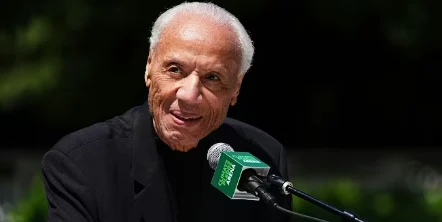
The NBA is losing one of its most recognizable faces. Lenny Wilkens, a former 3 time basketball Hall of Fame, who made a name in the game as a player and a coach, has died at the age of 88. He leaves behind a legacy of skilful play, coaching innovation, and uncompromising dignity.
An uneventful Beginning, A Rising Star.
Wilkens joined the NBA at a time when the league was growing its identity and presence. He was an athletically intelligent, tall, gritty point guard who was able to move through this changing terrain with a lot of tact and grace. His presence on the court was not constructed through flash; it was constructed through vision. Wilkens was the planner, the constant hand of the teammates, the one who determined the rhythm, and ensured that the appropriate play reached the appropriate person.
His career as a player lasted 15 years, and he has played in various teams, but it was in Seattle that he got his identity well established. He created a name, there among rising talent and growing demands, not of himself as a scorer or an assistant, but of how he raised everyone around him.
Greatness in Coaching, Respect.
By the time Wilkens ended his playing days, he was no longer going to enter the gym, but it was a different arena of influence. He managed the transition as a gracious coach who went ahead to win the record of most NBA games coached in his time. His teams, the 1979 Seattle SuperSonics championship team in particular, were a testament to his philosophy: his work ethic, his intelligence, and character were as important as athleticism.
He did not yell instructions on the sidelines. Instead, he silently shook the needle. He led by example. He realized that coaching is not a matter of Xs and Os, but it is a matter of people. One time, he said: Leaders do not yell and scream. The said philosophy was not mere rhetoric. It was manifested in the way he dealt with players, adversity, and expectations.
Make the Best of Memoirs.
Wilkens became a player in the Basketball Hall of Fame, later on as a coach, and established his niche among the unmatched two-threat legends of the game.
He is a coach who has coached more than 2,400 NBA games, and few can match this record.
The 1979 SuperSonics title is a landmark in the city of Seattle, a team that, up to this date, still adores him as a godfather figure in the history of its basketball.
Other than the NBA, Wilkens was an assistant with the 1992 “Dream Team and subsequently helped coach the U.S. Olympic team to gold in 1996- further reaching into the global spectrum.
These are not mere figures, but they are chapters in the history of a man who never had to shine in the limelight to shine. He simply earned respect.
Why His Passing Resonates
In a game where showcasing highlights is the order of the day, Wilkens was a reminder that in many cases, legacy is made in the silent, steady greatness. His example was that you can be level-headed, considerate, and still a winner. His time might have gone–but his ideals are all too topical:
Respect-based leadership is here to stay beyond any period of championship.
Sometimes coaching involves more than teaching talent; it involves opening potential.
Sport longevity is not about remaining youthful; it is about being genuine.
Most players, coaches, and influencers, who shape basketball today, have shoulders on which he contributed to building.
My Reflection: A Timeless Roadmap to Greatness.
The life of Lenny Wilkens provides a kind of blueprint to greatness, one that does not depend on scandals, sensations, and hype. Rather, it is based on patience, originality, and custodianship.
Wilkens pursued more than fame, which many athletes and coaches do nowadays, but a more silent and lasting respect. He lifted teams. He nurtured talent. He got his way, and he got his way the hard way.
When remembering him, it is not merely about what he won but how he won. And the response will be in all the players whom he coached, all the teams whom he led, and at every time he preferred integrity over interruption.
He is dead, yet there is no court that he walked, no sideline that he walked, and no lives he lived that are changed by him.


